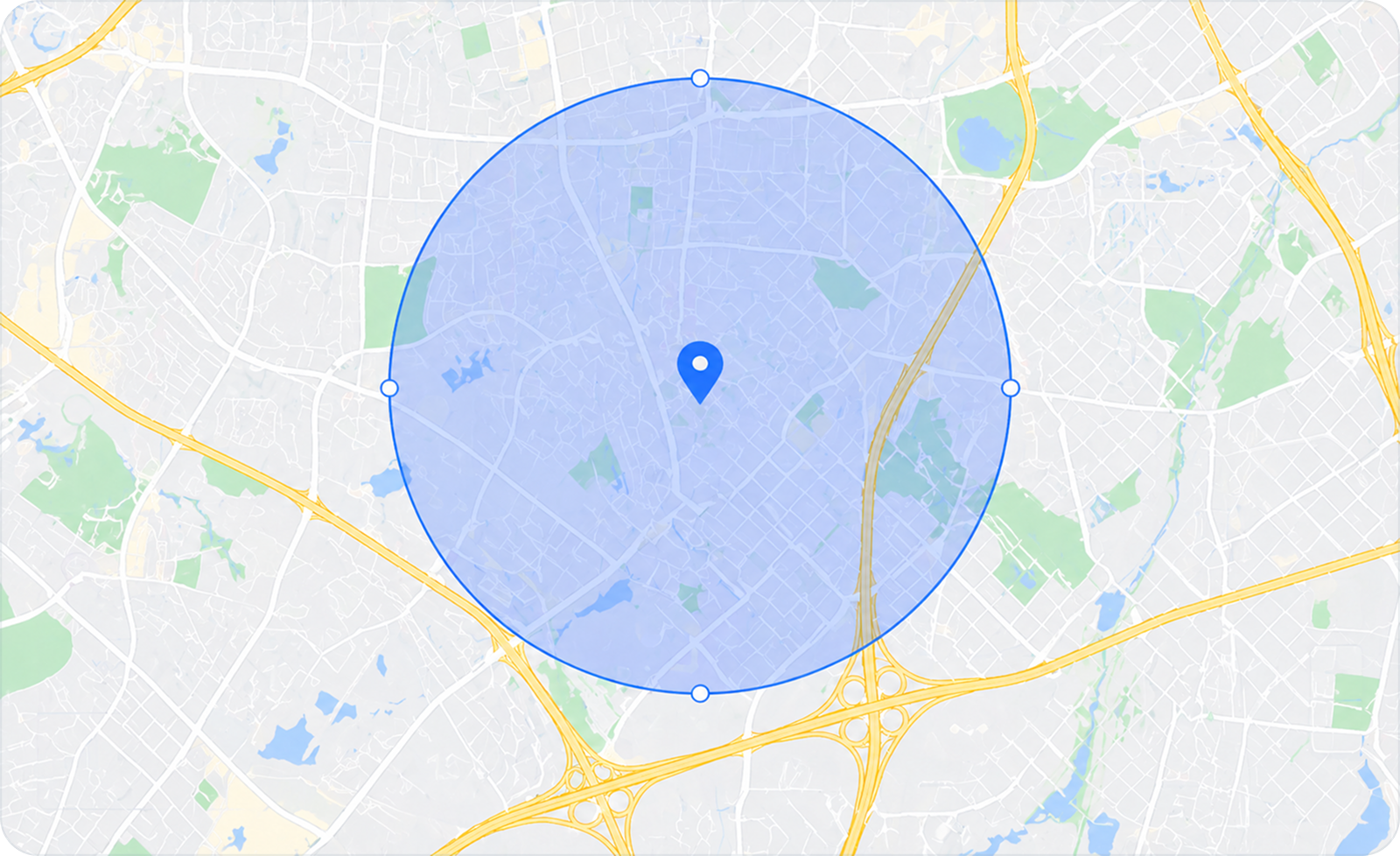
Definition:
Geofencing is a digital advertising technique that establishes a defined virtual boundary around a specific physical location; a competitor apartment community, an employer campus, a university, a transit hub, or a retail center - and serves targeted ads to mobile users who enter, dwell within, or have recently visited that area. Geofences are typically built using GPS coordinates and can range in size from a single building to a multi-block radius, depending on the targeting objective.
Why it matters:
Geofencing allows multifamily marketers to reach prospects based on demonstrated physical behavior, not just demographic assumptions or keyword intent. Targeting visitors to a competitor's leasing office, for example, reaches renters who are demonstrably in the market and actively evaluating options, a far more qualified audience than broad interest-based targeting. Similarly, geofencing around major employers or university campuses enables community-specific messaging tailored to the needs and commute patterns of that workforce or student population. When combined with compelling creative and strong calls to action, geofencing can be a highly efficient acquisition tool, particularly for communities in dense urban markets where proximity to amenities and employers is a key leasing driver.