Definition:
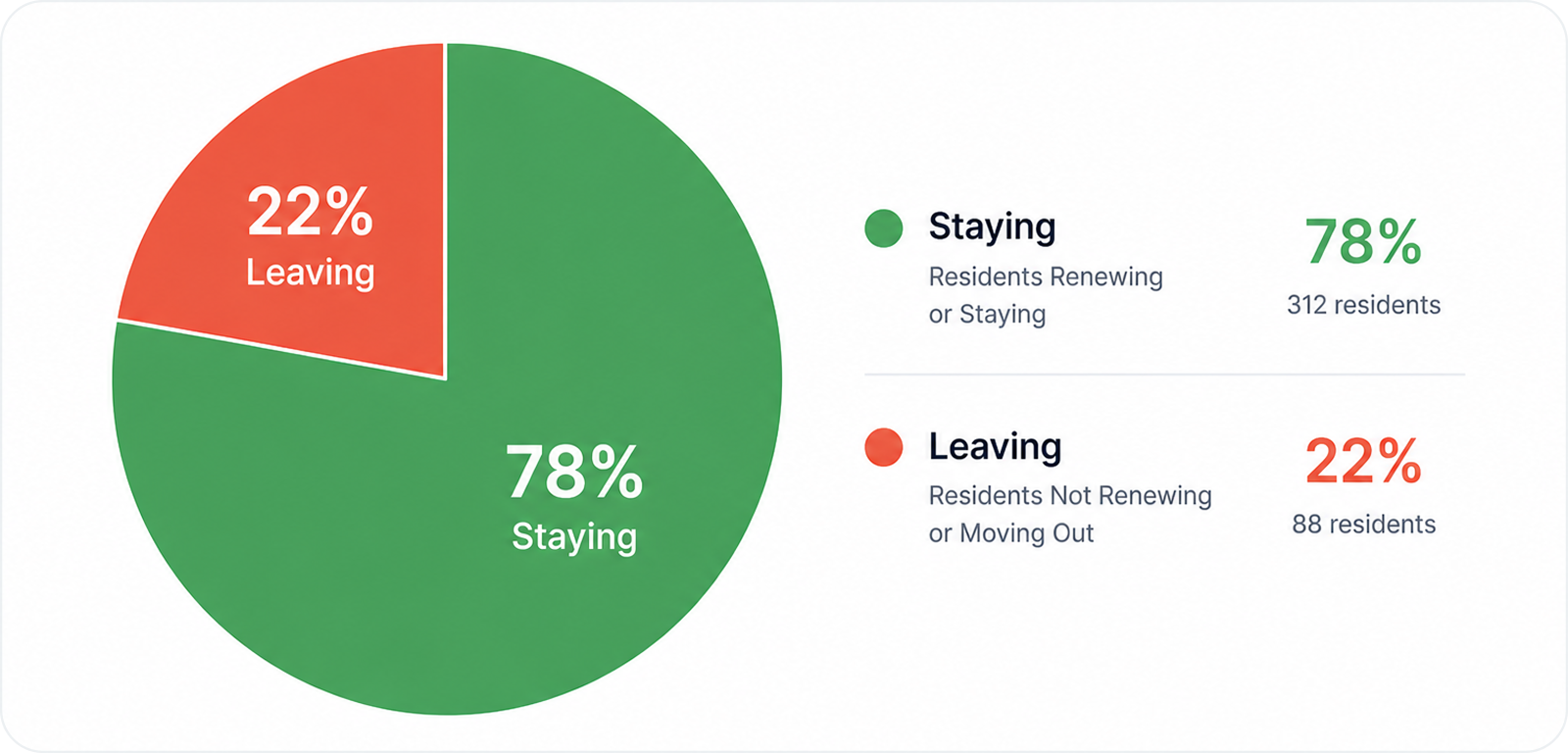
Retention rate in multifamily is the percentage of residents who remain in a community over a defined time period, most commonly measured on an annual basis. It is calculated by dividing the number of residents who were present at both the start and end of the measurement period by the total number of residents at the beginning of that period. Unlike renewal rate (which measures a specific decision point) retention rate is a cumulative measure of how well a community sustains its resident base over time.
Why it matters:
High retention is the most cost-efficient path to occupancy stability. Every retained resident eliminates a cycle of turn costs, vacancy loss, marketing spend, and leasing labor. Communities that consistently achieve retention rates above industry averages tend to share common operational characteristics: fast maintenance response, proactive communication, meaningful community programming, and rent pricing that residents perceive as fair relative to the value they receive. Retention rate also interacts with NOI in compounding ways; a community that retains 65% of residents annually versus one that retains 50% will, over a three to five-year period, demonstrate dramatically different financial trajectories even if their occupancy rates appear similar at any given point in time.