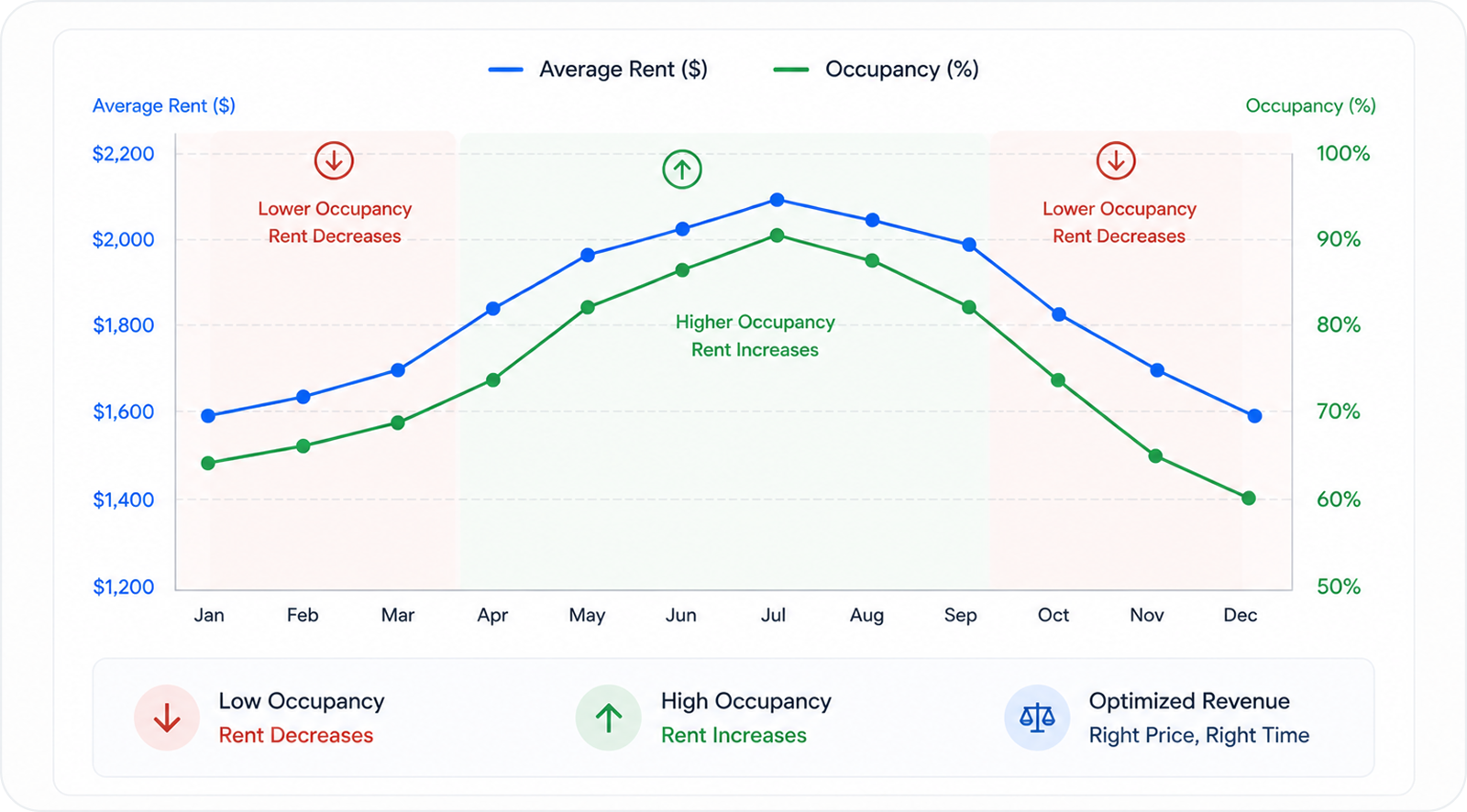
Definition:
Revenue management in multifamily refers to the use of data-driven systems and algorithmic tools to set and adjust unit rents dynamically based on inputs including current occupancy, lease expiration exposure, historical leasing velocity, competitor pricing, and market demand signals. These platforms, which are historically reliant on aggregated data across multiple operators, generate pricing recommendations designed to maximize revenue per available unit across a property's entire portfolio of floor plans and lease terms.
Why it matters:
Revenue management has been a foundational performance tool for multifamily operators for decades, enabling more precise rent optimization than manual or intuition-based pricing. However, the legal landscape has shifted significantly. Recent antitrust litigation has challenged the practice of sharing proprietary leasing and pricing data across competing ownership groups through third-party platforms, with courts and regulators increasingly viewing this as potential price coordination. Operators must now rely more heavily on internally-generated data, publicly available market intelligence, and transparent pricing methodologies. This shift increases the strategic value of internal data infrastructure; clean occupancy records, historical rent performance, and exposure tracking, as inputs to pricing decisions that can no longer depend on cross-operator benchmarking.