The Conversations We've All Had
Every multifamily marketer recognizes these moments. Someone in leadership looks at the monthly report and asks: "We've been running ads for six months. Where are the results?" Or: "There's too much data — can someone just tell me if it's working or not?" These are reasonable questions. The problem is that the multifamily attribution ecosystem makes them genuinely difficult to answer with certainty.
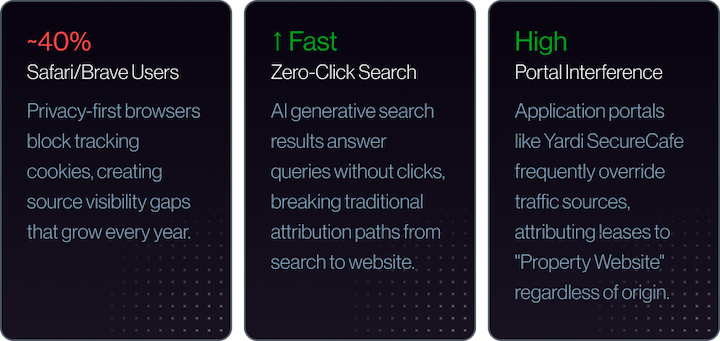
The technical and structural realities of how leasing journeys work make perfect attribution nearly impossible. Privacy-first browsers block roughly 40% of tracking cookies, AI-powered zero-click search breaks traditional attribution paths, and application portals frequently override traffic sources entirely.
The Conversations We've All Had
Every multifamily marketer recognizes these moments. Someone in leadership asks: "We've been running ads for six months. Where are the results?" Or: "There's too much data — can someone just tell me if it's working or not?" These are reasonable questions. The problem is that the multifamily attribution ecosystem makes them genuinely difficult to answer with certainty — not because marketers aren't doing their jobs, but because the technical and structural realities of how leasing journeys work make perfect attribution nearly impossible.
Why Multifamily Attribution Is Uniquely Difficult

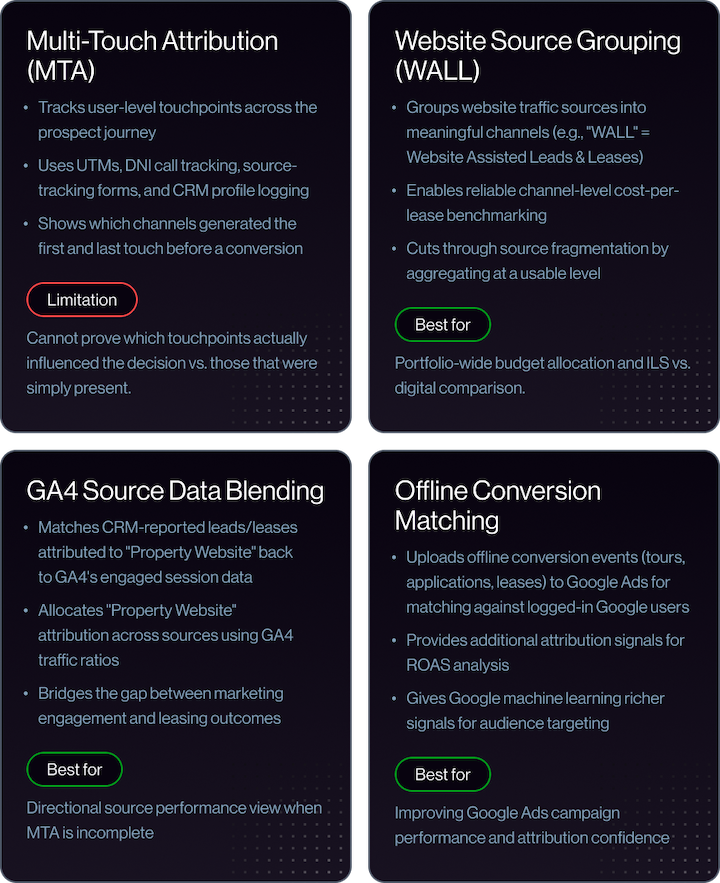
Four Attribution Approaches That Work
Website Source Grouping in Practice: The WALL Table
Rather than trying to attribute every lease to a single precise source, the WALL grouping consolidates website-influenced leases into one channel that can be compared fairly against paid ILS sources.
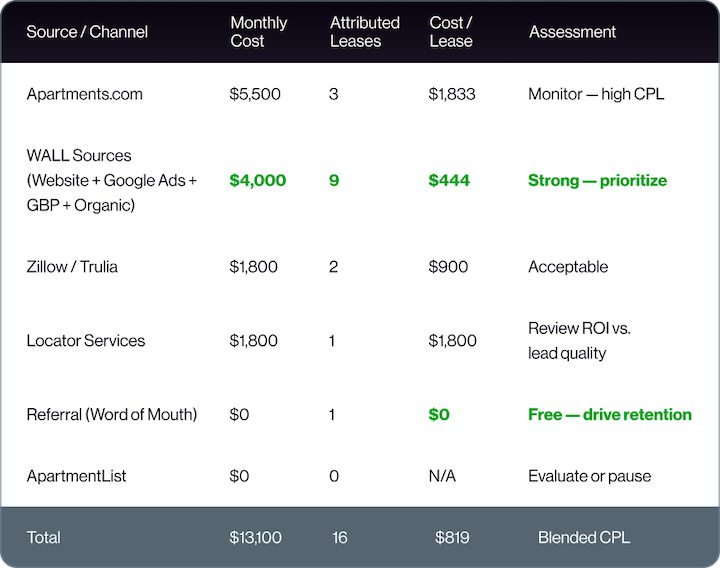
This table — built from imperfect but consistently applied attribution methods — is genuinely actionable. It tells you where to shift budget, what to maintain, and what to question. It does not require perfect data. It requires consistent data, applied consistently over time.