Marketing Is Not Physics
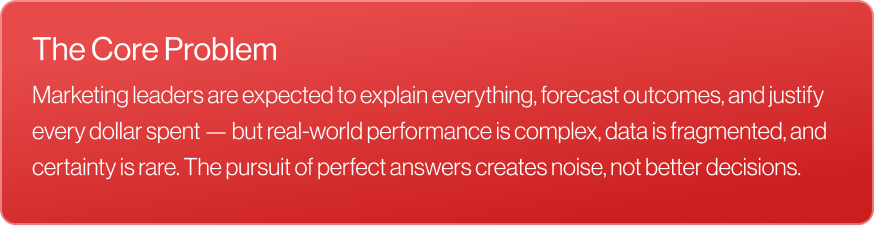
There is a persistent myth in digital marketing: that because we can measure clicks, impressions, and conversion rates, we can — and should — be able to explain every leasing outcome with precision. This expectation is understandable. It is also wrong, and acting as if it were true creates more problems than it solves.
Unlike a physics experiment run in a controlled environment, marketing operates in the messiness of the real world. Customer behavior is influenced by factors that no dashboard captures — a friend's recommendation, a spontaneous drive-by of the property, a review they read three months ago, a competitor's concession that just launched. Data signals are fragmented across platforms, attribution models have blind spots, and privacy-first browsers increasingly obscure the journey between a click and a lease.
The FOMO Trap and Trend Chasing
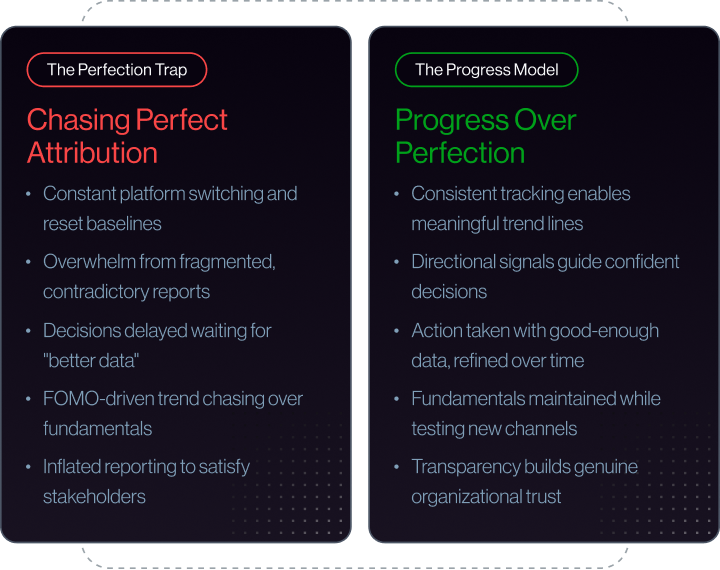
The pressure is compounded by the pace of change. AI is reshaping search. New MarTech platforms emerge constantly. Every conference promises that some new attribution tool or AI-powered platform will solve the data problem once and for all. The result is FOMO — a fear of missing out that pulls marketing teams away from the fundamentals that actually drive results: consistent tracking, disciplined testing, honest benchmarking, and patient optimization.
The irony is that the more marketers chase perfection and the latest trend, the less stable their performance data becomes. Each new tool resets baselines. Each platform change disrupts attribution. Each new initiative crowds out the deep work of understanding what's actually working.
What Success Actually Looks Like
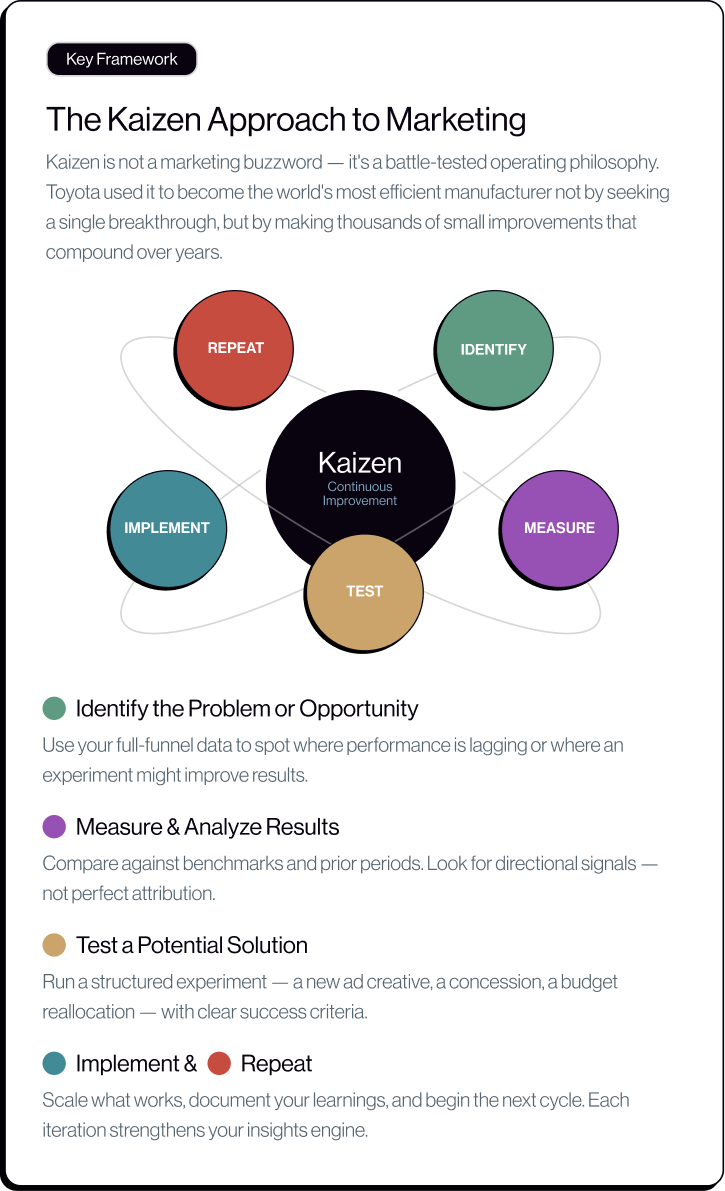
What if success were defined not by perfect attribution data, but by trust, clarity, and consistent progress? This is not a concession — it is a more accurate description of how excellent marketing organizations actually operate. They do not wait for perfect information. They build systems that generate reliable signals, act on those signals, measure the results, and iterate.