
Marketing budgets are rarely unlimited. Every dollar invested must support business objectives, justify its return, and contribute to long-term success. Yet one of the biggest challenges multifamily marketers face isn't deciding whether to invest in marketing - it's deciding where to invest.
Should more budget go toward paid search campaigns that generate immediate leads? Or should more resources be dedicated to brand awareness initiatives that build long-term recognition and trust?
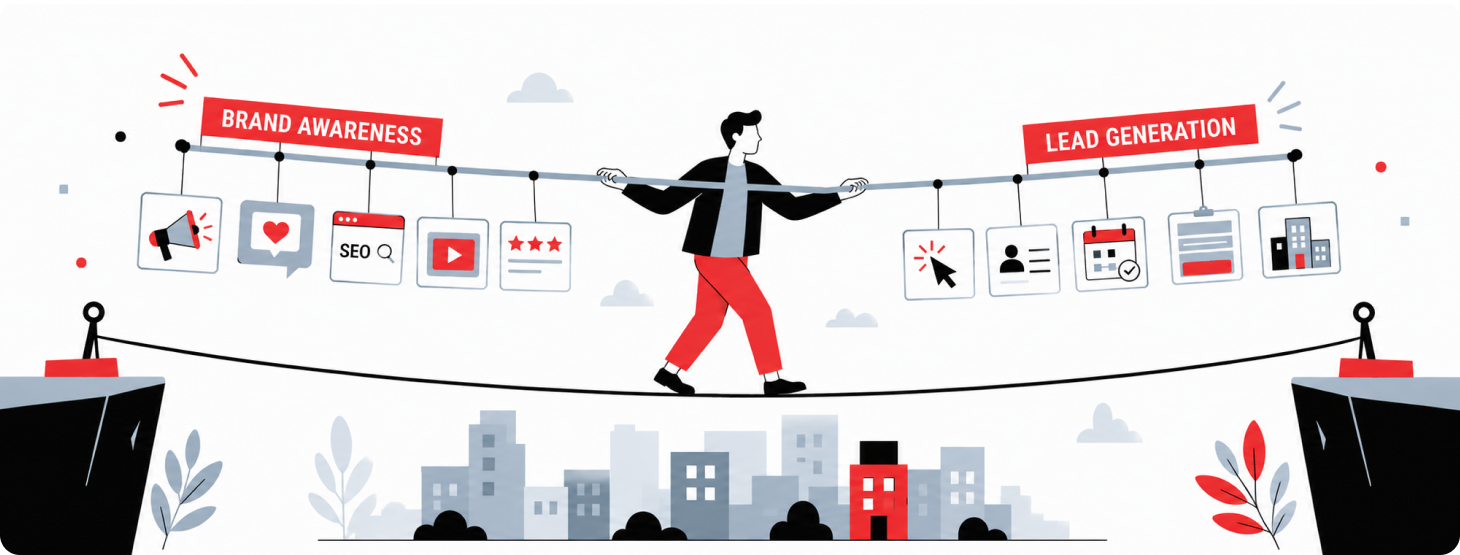
The answer isn't choosing one over the other. The most successful multifamily marketing strategies recognize that brand awareness and lead generation serve different purposes, but together they create a stronger, more sustainable marketing engine.
As organizations begin planning their 2027 marketing budgets, finding the right balance between these two investments can improve both short-term leasing performance and long-term growth.
Understanding the Difference
Although they often work together, brand awareness and lead generation have distinct objectives.
Brand awareness focuses on introducing your property or management company to prospective renters and establishing familiarity before they're actively searching for a new home. These efforts build recognition, trust, and preference over time.
Lead generation, on the other hand, is designed to encourage immediate action. Its goal is to move prospects toward scheduling a tour, requesting information, or submitting an application.
Both are essential-but they deliver value on different timelines.
Why Lead Generation Often Gets More Budget
When budgets are tight, lead generation campaigns are often prioritized because their results are easier to measure.
Metrics such as cost per lead, cost per tour, cost per lease, and conversion rate provide clear evidence of campaign performance. Because these campaigns directly support occupancy goals, they're often viewed as the safest investment.
However, relying exclusively on lead generation can create challenges over time. Without ongoing brand-building efforts, marketing becomes increasingly dependent on paid advertising. Competition increases, acquisition costs rise, and prospects may have little familiarity with your community before clicking an ad. This often leads to higher costs and lower conversion efficiency.
The Long-Term Value of Brand Awareness
Brand awareness campaigns may not produce immediate leases, but they influence future purchasing decisions in powerful ways.
When prospects recognize your property's name, consistently see your messaging, or engage with your content before beginning their apartment search, they're more likely to consider your community when the time comes to move.
Brand awareness also helps establish credibility. A property with a recognizable brand, active social media presence, consistent messaging, and valuable content often feels more trustworthy than one that appears only through paid advertisements.
Over time, this familiarity can improve the performance of every lead generation campaign that follows.
Think of Awareness as Filling the Funnel
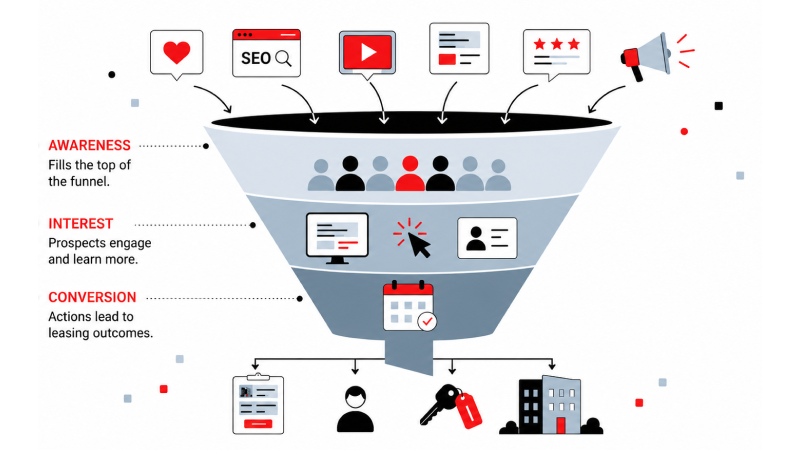
One way to visualize the relationship is to think of your marketing funnel.
- Brand awareness fills the top of the funnel by introducing new audiences to your community.
- Lead generation moves interested prospects through the middle and bottom of the funnel by encouraging specific actions.
If all of your budget is focused on converting existing demand, eventually fewer qualified prospects enter the funnel. Conversely, if all of your investment goes toward awareness, you may generate attention without creating enough opportunities for leasing. Healthy marketing strategies continuously support both stages.
Matching Budget to Business Objectives
The right balance depends on your property's goals.
For example:
A stabilized community with consistent occupancy may invest more heavily in brand awareness to strengthen long-term market presence and reduce future acquisition costs.
A lease-up community or property experiencing elevated vacancy may temporarily prioritize lead generation to fill available units quickly.
Seasonality also plays an important role. During peak leasing periods, increasing lead generation efforts may make sense. During slower periods, investing in brand-building content, resident engagement, and community storytelling can prepare your marketing for future demand.
Budget allocation should remain flexible enough to support changing business needs throughout the year.
What Brand Awareness Looks Like
Brand awareness isn't limited to expensive advertising campaigns.
It often includes:
- Organic social media content
- Educational blog articles
- Resident stories and testimonials
- Community event coverage
- Video content
- Local partnerships
- Email newsletters
- Reputation management
- Search engine optimization (SEO)
These activities strengthen your brand while creating valuable touchpoints with prospective renters long before they're ready to lease. Because much of this content continues generating value over time, brand-building investments often produce lasting returns.
What Lead Generation Looks Like
Lead generation campaigns focus on driving measurable actions.
Common examples include:
- Paid search advertising
- Paid social campaigns
- Retargeting ads
- Landing page campaigns
- Limited-time leasing promotions
- Call tracking initiatives
- Tour scheduling campaigns
These campaigns are typically optimized around clear conversion metrics and adjusted frequently based on performance data. While they often generate quicker results, they perform best when supported by a strong, recognizable brand.
Measuring Success Differently
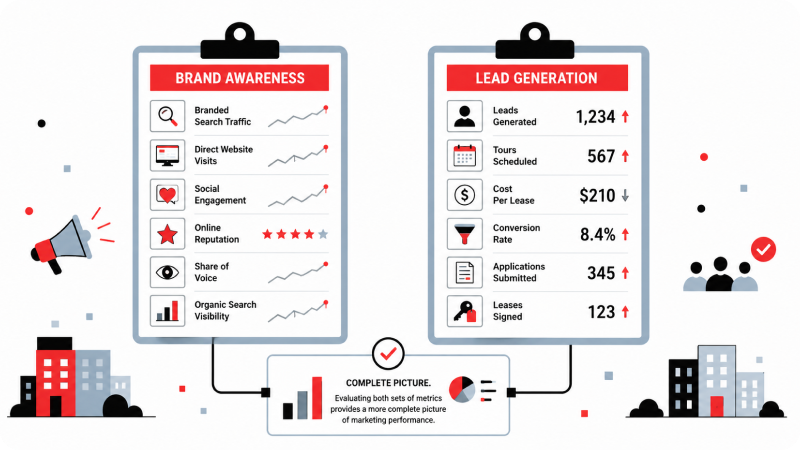
One reason marketers struggle to balance these investments is because success is measured differently.
Lead generation campaigns often produce immediate metrics:
- Leads generated
- Tours scheduled
- Cost per lease
- Conversion rate
Brand awareness campaigns require a broader perspective.
Success may include:
- Increased branded search traffic
- Higher direct website visits
- Improved social engagement
- Growth in returning website visitors
- Stronger online reputation
- Increased share of voice
- Higher organic search visibility
These indicators demonstrate growing familiarity and trust, even if conversions occur later in the customer journey. Evaluating both sets of metrics provides a more complete picture of marketing performance.
Use Data to Find the Right Balance
Rather than setting a fixed percentage for awareness and lead generation, use historical performance to guide investment decisions.
Review reports to identify questions such as:
- Which campaigns consistently generate the highest-quality leads?
- How has brand search volume changed over time?
- Which channels produce the strongest cost per lease?
- Are acquisition costs increasing?
- Where are prospects first discovering your communities?
These insights help marketers adjust budgets based on evidence instead of assumptions. As market conditions change, so should budget allocation.
Build a Marketing Strategy That Works Today and Tomorrow
One of the biggest mistakes organizations make is focusing exclusively on immediate results. Marketing should absolutely support today's occupancy goals-but it should also prepare for tomorrow's opportunities. Brand awareness creates future demand, and lead generation converts existing demand.
When both work together, marketing becomes more efficient, more resilient, and more effective over time. Instead of competing for budget, these strategies should complement one another.
Planning for 2027 Starts Now
As budgeting season approaches, multifamily marketers have an opportunity to move beyond short-term thinking.
Rather than asking, "How many leads can this campaign generate?", consider asking:
- Will this investment strengthen our brand?
- Will it improve future campaign performance?
- Will it reduce acquisition costs over time?
- Does it support both immediate leasing goals and long-term growth?
Answering these questions creates a more balanced marketing strategy-one that's capable of driving results today while building momentum for the future.
Investing in Sustainable Growth
The strongest multifamily marketing strategies don't force a choice between brand awareness and lead generation. They recognize that sustainable growth depends on both.
Brand awareness establishes trust, familiarity, and long-term market presence. Lead generation turns that trust into measurable action.
When budgets are thoughtfully balanced, each investment strengthens the other. Awareness improves conversion rates. Lead generation validates brand investments. Together, they create a marketing strategy that delivers stronger ROI, greater efficiency, and more predictable performance.
As you begin planning for 2027, remember that the goal isn't simply to generate more leads. It's to build a marketing ecosystem that consistently attracts, engages, and converts the right renters-today and well into the future.