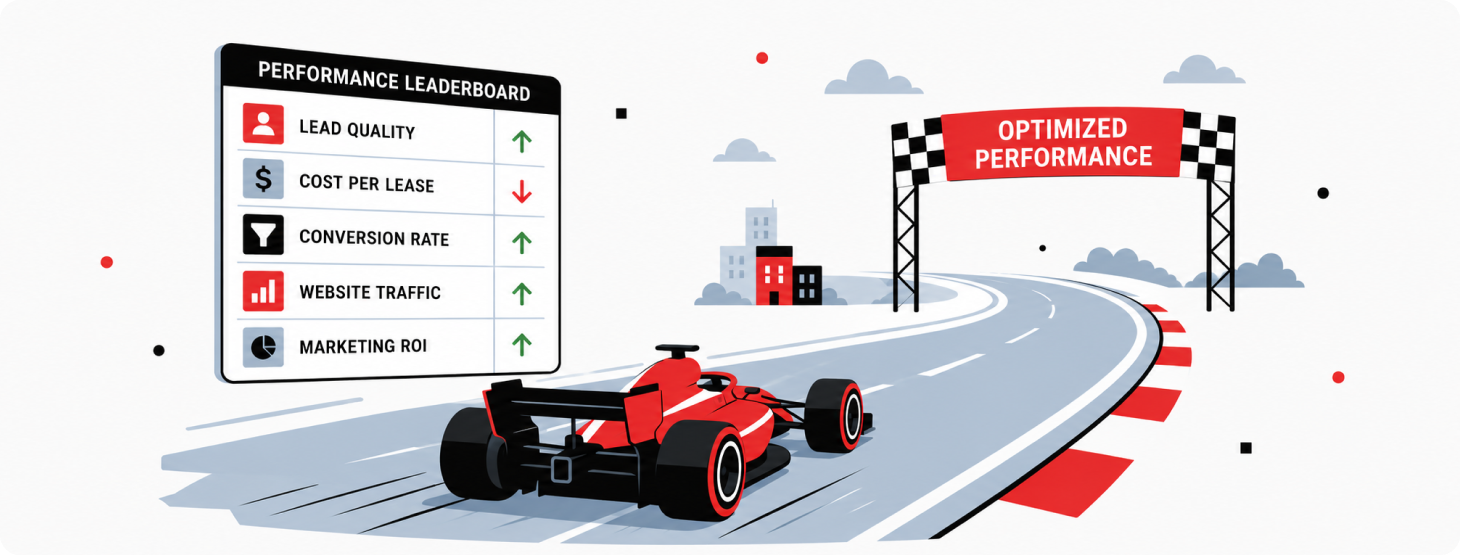

Marketing reports are everywhere. Weekly dashboards, monthly performance summaries, website analytics, advertising metrics, CRM reports-the average multifamily marketer has access to more data than ever before. Yet despite this abundance of information, many organizations struggle with a common challenge: knowing what to do with it.
Too often, reports become historical records instead of strategic tools. Teams spend hours collecting and presenting data, only for it to be reviewed briefly before moving on to the next reporting cycle. But reports shouldn't just tell you what happened; they should help determine what happens next.
The most successful multifamily marketing teams don't view reporting as the end of a campaign, but rather see it as the beginning of better decision-making. Every report should answer an important question, reveal a new opportunity, or inspire a strategic adjustment that improves future performance.
As organizations begin planning budgets and marketing strategies for 2027, learning how to transform reporting into action is one of the most valuable skills a marketing team can develop.
The Difference Between Data and Insight
It's easy to confuse data with insight, but they are not the same thing. Data consists of numbers, charts, and performance metrics. Insight explains what those numbers actually mean.
For example: A report might show that website traffic increased by 18 percent.
That's data.
The insight comes from asking additional questions:
- Which marketing channels drove the increase?
- Did those visitors convert into qualified leads?
- Was the increase tied to a specific campaign or seasonal trend?
- Did higher traffic ultimately produce more leases?
Without context, data simply describes activity, while insight explains why the activity occurred and whether it matters.
The goal of reporting isn't collecting more numbers-it's uncovering the story those numbers are telling.
Start by Looking for Trends
Individual metrics can fluctuate from week to week, making it difficult to draw meaningful conclusions from a single report. Instead, look for patterns over time.
Questions worth asking include:
- Are website conversions improving month over month?
- Has cost per lease steadily increased during the last quarter?
- Which campaigns consistently outperform others?
- Are certain properties seeing recurring seasonal trends?
- Is lead quality improving or declining?
Trend analysis helps separate temporary fluctuations from long-term performance shifts. For example, one month of lower lead volume may not require immediate action. But if lead quality has steadily declined over several months while advertising costs continue to rise, that's a trend worth investigating.
Looking at data over time creates confidence in your decisions because you're responding to patterns rather than isolated events.
Find the Channels That Need Attention
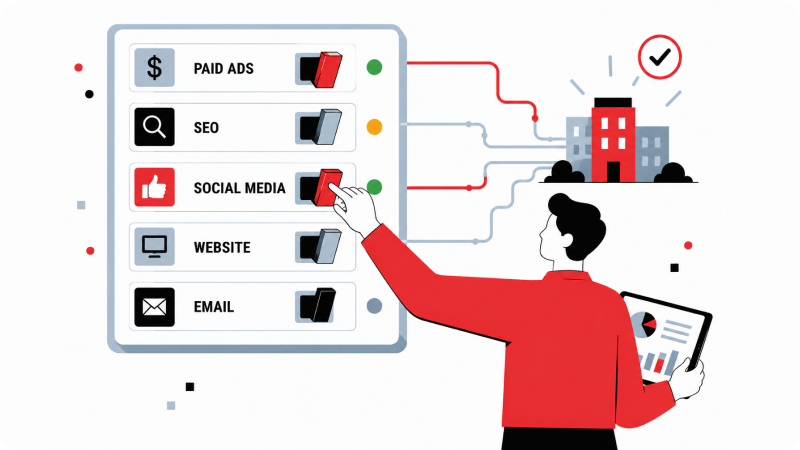
Not every marketing channel contributes equally to leasing performance. That's why reports should be used to identify both top performers and underperformers. Something to note - an underperforming channel isn't necessarily one with the fewest leads.
Instead, consider questions like:
- Which channels generate the highest cost per lease?
- Which produce the lowest-quality leads?
- Where are prospects dropping out of the funnel?
- Which campaigns receive engagement but few conversions?
Sometimes a channel isn't failing-it simply isn't aligned with the right audience or campaign objective. For example, a social campaign may generate excellent awareness but struggle to convert prospects directly into leases. That doesn't automatically make it unsuccessful.
Understanding each channel's role within the renter journey helps marketers evaluate performance more accurately and make better optimization decisions.
Let Performance Guide Budget Decisions
Marketing budgets shouldn't remain static simply because they're set at the beginning of the year. Reports provide valuable evidence for adjusting investments throughout the year. If one campaign consistently delivers qualified leads at a lower cost than others, it may deserve additional investment. Likewise, if a channel repeatedly underperforms despite ongoing optimization, it may be time to reduce spending and explore other opportunities.
Budget adjustments don't always need to be dramatic. Small reallocations based on performance data often produce meaningful improvements over time.
The objective isn't simply to spend less-it's to invest more effectively.
Use Reports to Identify Testing Opportunities
Every marketing report should inspire at least one new question. Instead of asking, "Did this campaign work?" consider asking:
- Could different messaging improve conversion?
- Would another audience segment respond better?
- Should landing pages be simplified?
- Would new creative increase engagement?
- Is there an opportunity to test another advertising channel?
Reports provide the evidence needed to prioritize testing.
Rather than making changes based on assumptions, marketers can build experiments around actual performance trends. Continuous testing transforms reporting into an ongoing optimization process instead of a retrospective exercise.
Measure the Impact of Your Changes
Reporting only creates value if it leads to measurable improvement. Whenever adjustments are made-whether reallocating budget, updating creative, or refining audience targeting-it's important to measure the results.
This creates a continuous improvement cycle:

Build a Culture of Continuous Improvement
The highest-performing marketing organizations don't treat reporting as a monthly obligation, instead they treat it as an ongoing conversation.
Reports become opportunities to ask:
What's working?
What's changed?
What's surprising?
What should we do differently next?
This mindset encourages collaboration across marketing, leasing, and leadership teams. Instead of assigning blame for underperformance, reporting becomes a shared tool for identifying opportunities and improving outcomes. Over time, this creates a culture where decisions are driven by evidence rather than assumptions.
Don't Chase Every Metric
One common mistake marketers make is reacting to every small fluctuation. Not every change requires action. Focus on metrics that directly influence business outcomes, such as:
- Cost per lease
- Lead-to-tour conversion
- Tour-to-lease conversion
- Qualified lead volume
- Marketing ROI
Supporting metrics like impressions, clicks, and website traffic remain valuable, but they should always be viewed in the context of larger business goals. Keeping attention on the metrics that matter prevents teams from making reactive decisions based on short-term noise.
Turn Reporting Into a Competitive Advantage
As planning for 2027 begins, marketing reports become more than performance summaries-they become strategic planning tools.Historical performance reveals where budgets should grow, where efficiencies can be found, and where new opportunities exist. Organizations that consistently use reporting to guide decisions can adapt more quickly to changing market conditions, optimize spending with greater confidence, and improve ROI over time.
The goal isn't simply to understand what happened last month, it's to make better decisions next month.
From Numbers to Action
Data alone doesn't improve marketing performance, but action does. The most valuable reports aren't the ones with the most charts or the longest lists of metrics-they're the ones that inspire better questions, smarter decisions, and continuous improvement.
By identifying trends, recognizing underperforming channels, reallocating budget strategically, testing new ideas, and measuring the results, multifamily marketers can transform reporting from a routine task into one of their most powerful strategic tools.
Because the true value of a marketing report isn't found in the numbers themselves. It's found in the decisions those numbers inspire.