Definition:
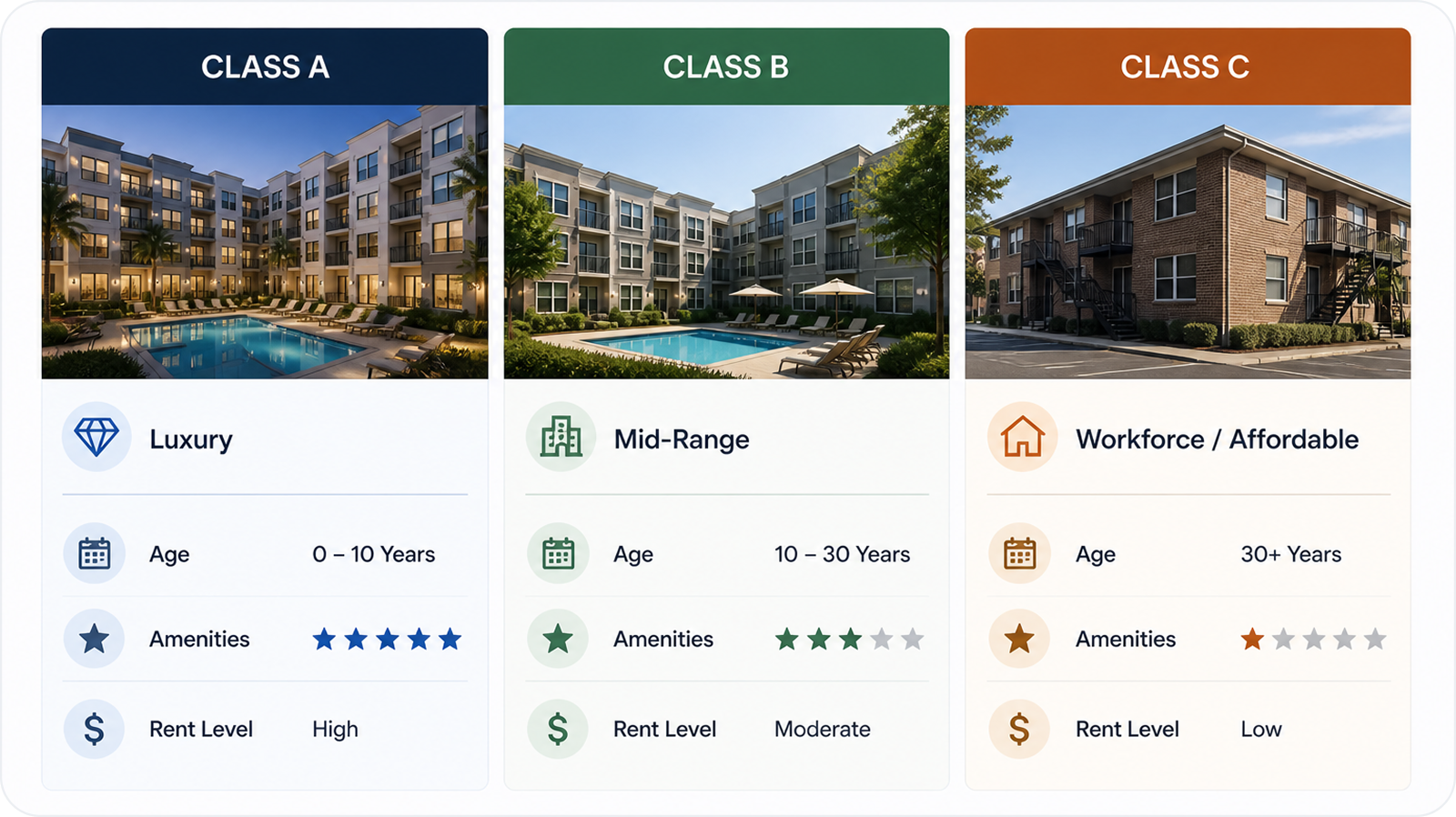
Building classes in multifamily are typically designated as Class A, B, and C, with some markets using Class D. These are categorical labels used to characterize properties based on a combination of factors including age, physical condition, location quality, unit amenity levels, common area finishes, resident income profile, and achievable rent range. Class A generally refers to newer, high-end properties in prime locations; Class B to older or moderately updated properties with strong fundamentals in good locations; and Class C to older, more affordable properties with deferred maintenance or lower-income resident profiles. There is no universally accepted or standardized definition, and classifications often vary by market and organization.
Why it matters:
Building classification influences nearly every operational and investment decision associated with a multifamily asset. It informs underwriting assumptions, capital expenditure planning, staffing models, and marketing positioning. A Class A community competes on luxury finishes, premium amenities, and brand experience; a Class B community competes on value and functionality; a Class C community competes primarily on affordability and accessibility. Understanding a property's class and its trajectory helps operators set realistic rent targets, calibrate maintenance and renovation investment, and position the community effectively against its true competitive set. Because classifications are subjective, portfolio operators benefit from establishing internal standards to ensure consistency in performance benchmarking and comparative reporting.