
In multifamily marketing, generating traffic is only half the battle. The real challenge (and opportunity) lies in what happens next.
A prospect clicks your ad, visits your website, and shows interest. But do they schedule a tour? Do they follow through? Do they ultimately sign a lease? These moments make up your leasing funnel, and optimizing that funnel is what transforms marketing activity into measurable results. As multifamily marketers continue shifting from attention to action, understanding and improving each stage of the leasing journey has never been more important.
What Is the Leasing Funnel?
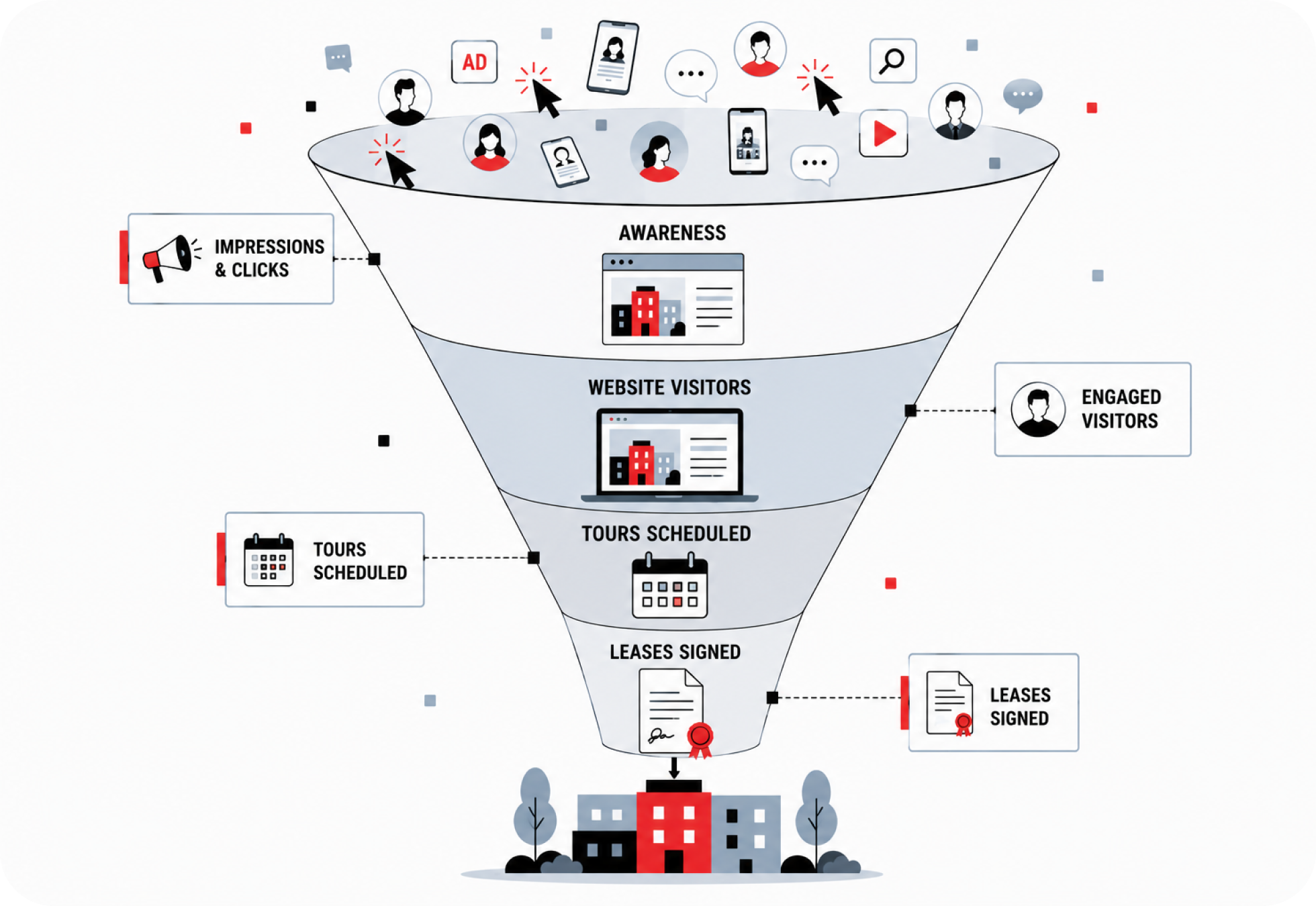
The leasing funnel represents the path a prospect takes from initial awareness to becoming a resident. While the exact journey can vary, it typically includes several key stages:
- Awareness (ad exposure, search, social discovery)
- Consideration (website visits, research, comparisons)
- Intent (lead submissions, tour scheduling)
- Conversion (applications, lease signing)
Each stage presents opportunities, and potential drop-off points. The goal of funnel optimization is simple: reduce friction, improve experience, and increase the percentage of prospects who move from one stage to the next.
Why Funnel Optimization Matters
Many multifamily teams focus heavily on top-of-funnel performance, meaning driving traffic and generating leads. While those metrics are important, they don’t always translate into leases. A campaign can produce thousands of clicks but still underperform if prospects disengage later in the journey.
Optimizing the funnel ensures that marketing efforts are not just generating interest, but converting that interest into tangible outcomes. It also improves efficiency. Increasing conversion rates often delivers better results than simply increasing spend.
Start With the First Click
The leasing journey begins the moment a prospect clicks on your ad or search result. That first interaction sets expectations for everything that follows.
To create a strong start:
- Ensure ad messaging aligns with landing page content
- Highlight clear value propositions immediately
- Optimize pages for mobile performance
- Minimize load times
If the transition from ad to website feels disconnected or slow, prospects are more likely to leave before engaging further. Consistency and speed are critical in this early stage.

Turn Website Visits Into Meaningful Engagement
Once a prospect lands on your website, the focus shifts to engagement. At this stage, prospects are evaluating whether your community meets their needs. They’re looking for information, clarity, and reassurance. A well-optimized website should:
- Provide intuitive navigation
- Clearly display pricing, availability, and floor plans
- Highlight amenities and lifestyle benefits
- Include high-quality visuals and virtual tours
- Make key actions (like scheduling a tour) easy to find
The goal is to reduce uncertainty and help prospects quickly find what they’re looking for. The longer they stay engaged, the more likely they are to take the next step.
Simplify the Path to Conversion
One of the most common reasons prospects drop off is friction. Long forms, unclear calls-to-action, or complicated scheduling processes can create barriers that prevent conversion. To improve this stage:
- Keep forms short and user-friendly
- Offer multiple ways to connect (form, phone, chat)
- Streamline tour scheduling with clear availability
- Ensure mobile usability across all touchpoints
Every additional step increases the chance of abandonment. Simplifying the process makes it easier for prospects to move forward.
Improve Speed-to-Lead
Timing plays a critical role in conversion. When a prospect submits a lead or inquiry, they expect a quick response. Delays can result in lost interest or missed opportunities, especially in competitive markets.
Improving speed-to-lead can significantly impact performance:
- Use automated responses to acknowledge inquiries instantly
- Route leads efficiently to the appropriate team members
- Follow up consistently across channels
Fast, thoughtful communication reinforces interest and keeps prospects engaged.
Support Prospects Through the Decision Process
Not every prospect converts immediately. Many require additional touchpoints before making a decision. This is where nurturing becomes essential. Email follow-ups, retargeting ads, and personalized communication can help guide prospects through the consideration phase.
Effective nurturing might include:
- Highlighting key amenities or features
- Sharing resident stories or testimonials
- Providing updates on availability or promotions
- Offering reminders to schedule tours
The goal is to stay top-of-mind while providing value, not pressure.

Optimize the Tour Experience
Tours are one of the most critical moments in the leasing funnel. Whether virtual or in-person, they represent a major step toward conversion. A strong tour experience should:
- Be easy to schedule and confirm
- Deliver on the expectations set by marketing
- Highlight key selling points clearly
- Provide opportunities for questions and engagement
Consistency between digital marketing and the in-person experience builds trust and reinforces the decision-making process.
Measure What Matters
Funnel optimization requires clear visibility into performance. cRather than focusing solely on top-level metrics, multifamily marketers should track how prospects move through each stage of the funnel.
Key metrics may include:
- Click-through rate (CTR)
- Website engagement (time on site, pages per session)
- Lead conversion rate
- Tour scheduling rate
- Lead-to-tour conversion
- Tour-to-lease conversion
- Cost per lease
Analyzing these metrics helps identify where drop-offs occur and where improvements will have the greatest impact.
Continuous Optimization Drives Better Results
The leasing funnel is not static. It evolves based on market conditions, renter behavior, and campaign performance. That’s why optimization should be ongoing. Small adjustments, such as improving page speed, refining messaging, simplifying forms, or enhancing follow-up processes can lead to meaningful gains over time. Testing different approaches and learning from results allows teams to continuously improve performance.
Turning Clicks Into Leases
At its core, funnel optimization is about alignment. It’s about ensuring that every stage of the renter journey - from the first click to the final signature, everything works together seamlessly. When marketing, user experience, and leasing operations are aligned, prospects move through the funnel more naturally. Friction is reduced. Confidence increases. Conversions follow.
As multifamily marketers focus on engagement and conversion, optimizing the leasing funnel is one of the most effective ways to drive real, measurable results. Because success isn’t just about getting prospects in the door - it’s about guiding them all the way through.